The next morning, we rose early. The gite, though luxurious in many respects, did not provide breakfast, just as it had not provided dinner the night before. Once more, this time for the final time, we went down the hill into Pont de Montvert. We stopped for breakfast at the same restaurant where we had dinner the night before. We were actually too early for the staff there, and one had to run to the bakery to get baguettes for our breakfast. But when it came the breakfast was great. Lots of coffee, bread and sweet jam, and orange juice.
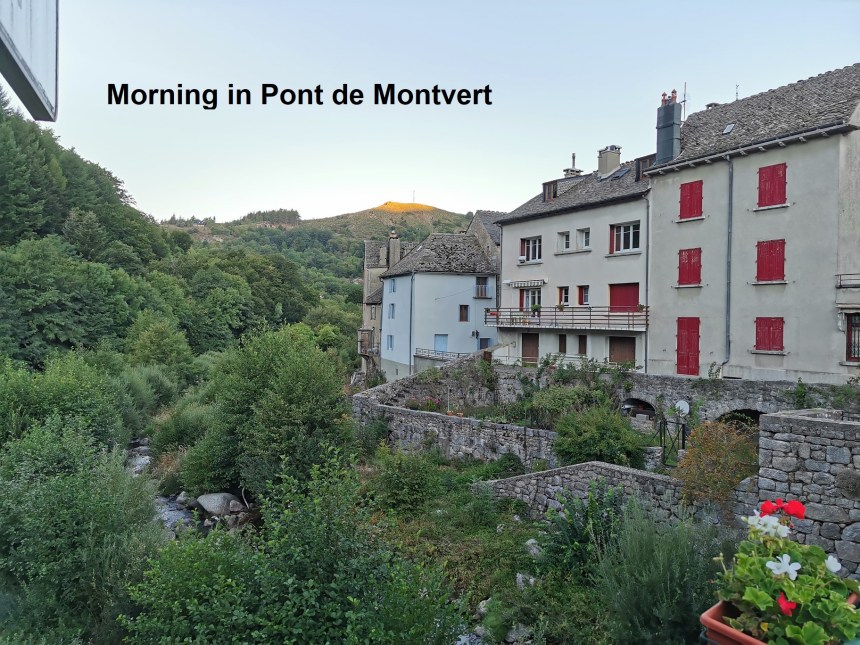
Jim came in while we were there. He had stayed at the village campsite. That was his modus operandi: to use campsites at each stop. We greeted each other and wished each other a good day. We had already told him that we intended to so some hacking on the route, taking a shortened and slightly lower route than the official one for much of the walk. Stevenson almost certainly took an even easier road than we did. He mentions in his book a new road following the valley of the Tarn, so it is highly unlikely that he took our hill road.

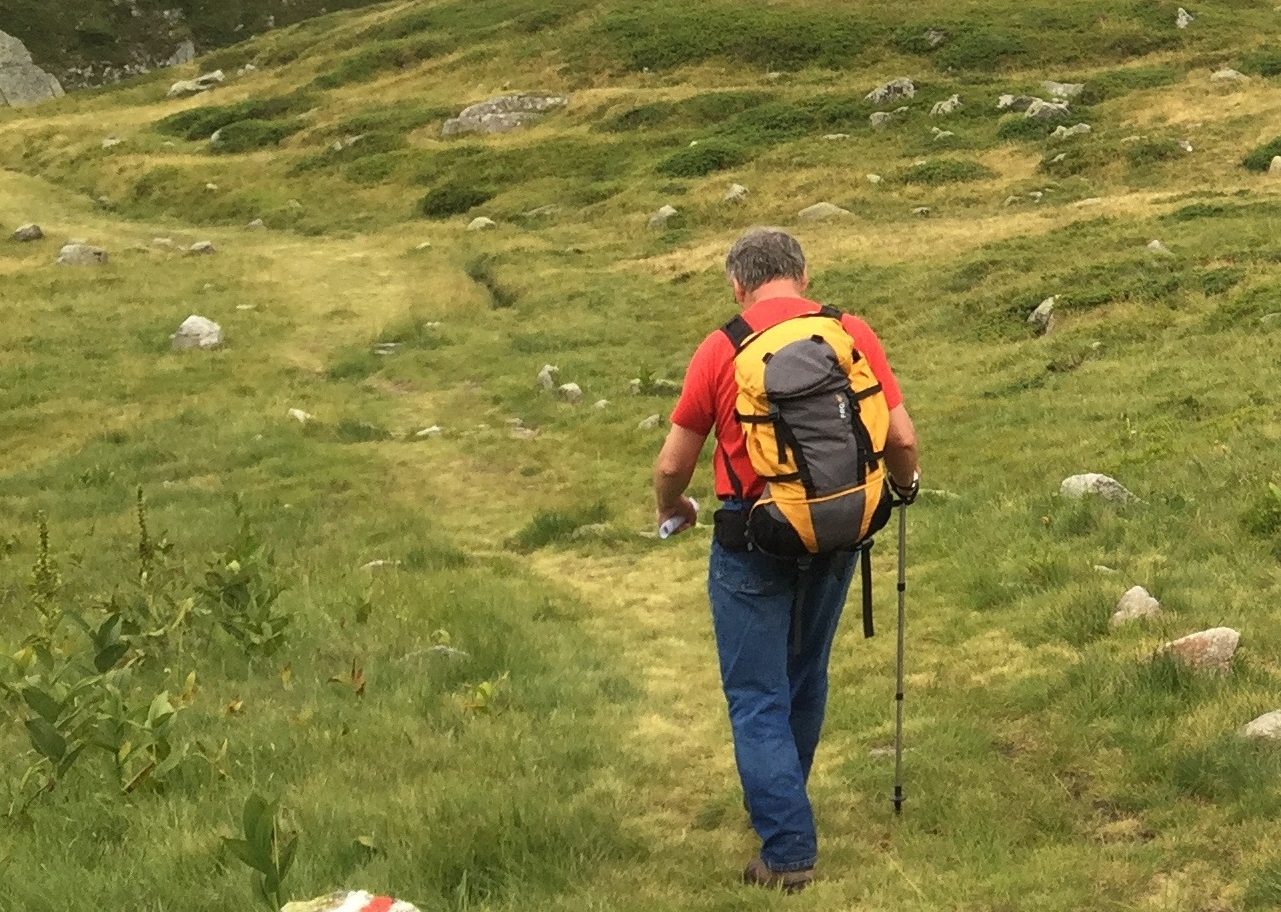
We said goodbye to Jim and the other walkers that were coming in for breakfast, and went on our way. The route rises quickly once it leaves the village. It twists and turns to gain height, but eventually levels off. It was not exactly level at that point, but it becomes a gently slope. We passed other walkers as we went. We even passed a donkey on the steep bit, though it was clearly not taking the route with any walkers. .
Eventually, we came to the fork. The official route turned left, and would eventually go up by about 300m. The hack that we had planned went right and was largely flat. I call it a hack, taking the word from computer operations. That is where I find a route that I think is better and more efficient than the official route. We took the turn to the right. It continued along a track for a few hundred metres before joining a small road. Before too long, that joined a slightly more important road. On a Sunday morning , all of these roads were quiet. We could walk this road almost with impunity. It twists and turns through the forest, going several kilometres without a significant junction and turn-off to left or right. Eventually, the road swung around to the left, and we joined up again with the official route.
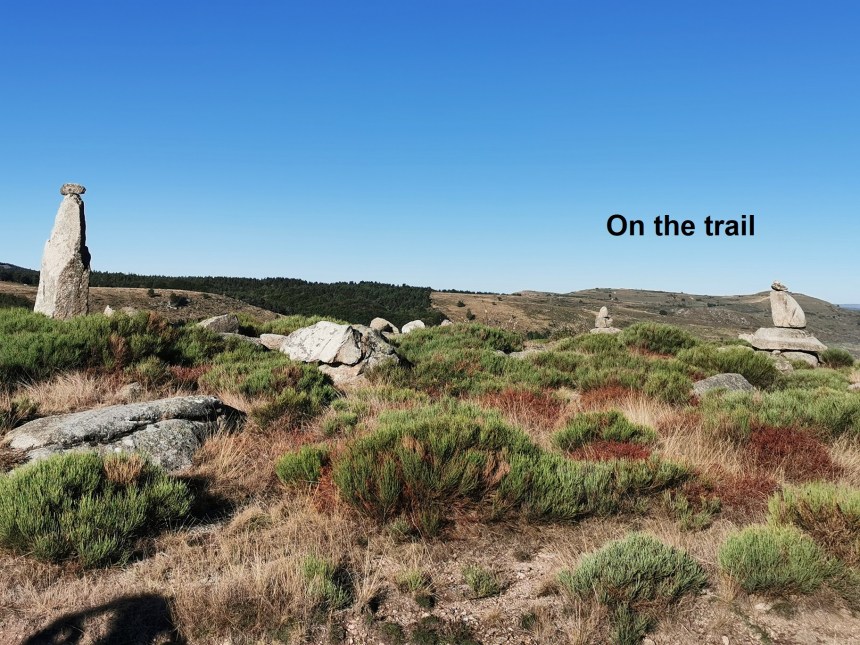
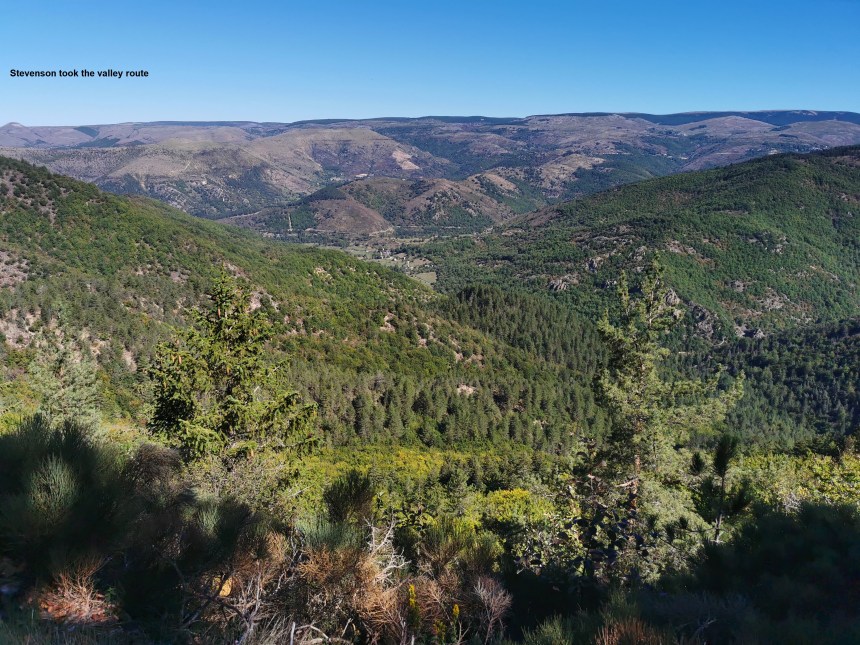
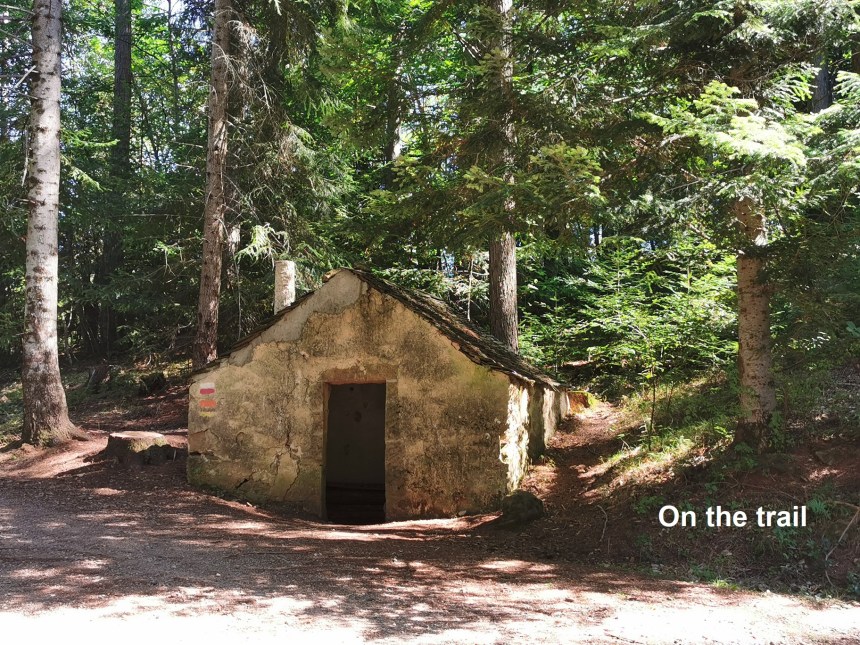
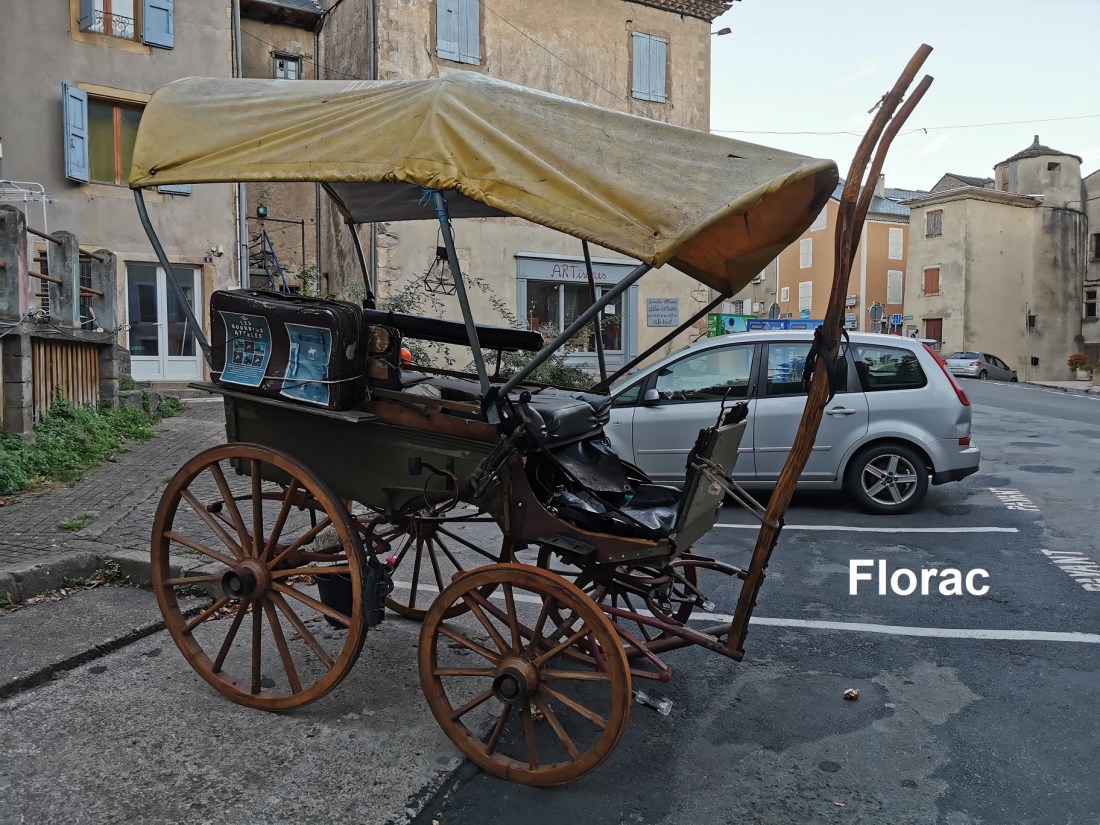
We paused for a short break where the official route crossed the road. The road goes on to its own destination, many miles from ours, so we went back on the official route, heading very gently downhill. It was intermittently level, very occasionally going uphill and mostly downhill, going through the forest all the way. Finally, the route emerged from the forest into fields. And at this point, I ran into some problems. There was a discrepancy between the map on my mobile phone app and the terrain on the ground. The app showed a turn to the left that would take us directly into Florac. But it is hard to argue with the reality of what is on the ground, and at the point where the app showed a junction, there was only the fence of a field. So after some confusion, we went on, and eventually, the route swung left towards Florac. We arrived at the northern end of the town of Florac. By now, I was almost running. We had not had a proper refreshment stop since leaving Pont de Montvert. And it was Sunday, in rural France, where most places stop serving early in the afternoon. The first place that I stopped at had stopped serving, though they had not yet closed their doors. The proprietor directed me up an alley, advising to turn left on reaching the next street. We did that, and soon came to a bar. They had, unfortunately, stopped serving food, but they were still serving beer. I asked for the largest, coldest beer that they had, and soon Joff and I were sitting in front of two refreshing draughts. We had arrived at our destination for the day.
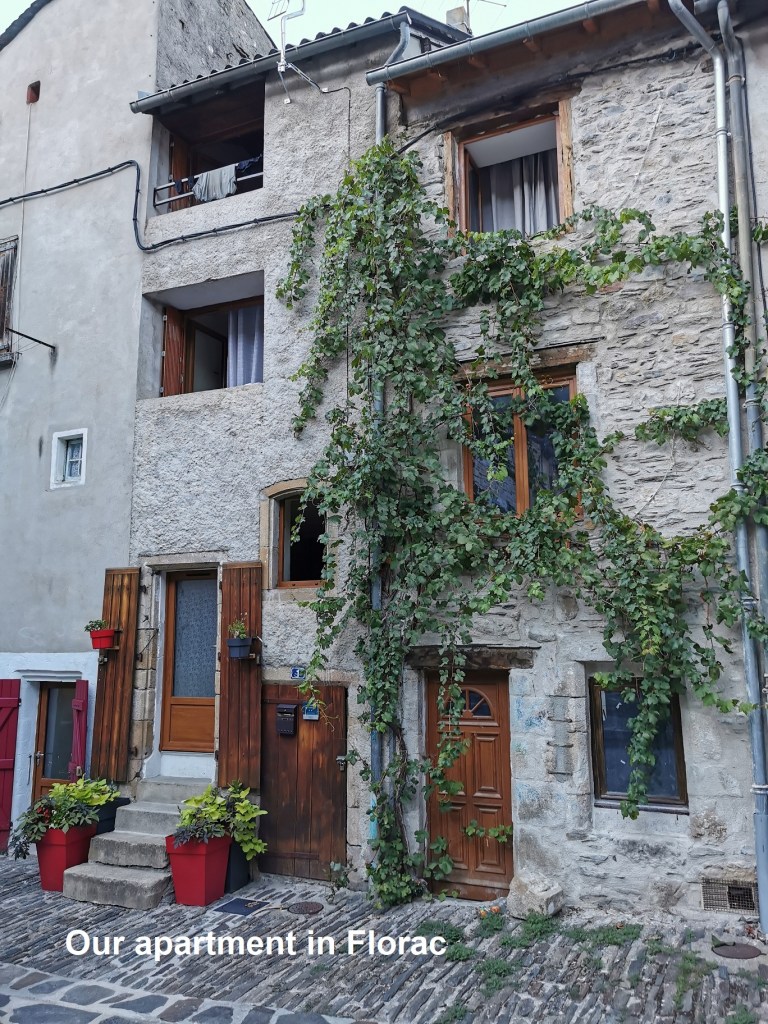
It was then time to find our accommodation for the night. I had booked an apartment, or so it was listed on the internet. Google maps sent us to the wrong place, so I had to phone the owner. Within minutes, he arrived by bicycle, and led us to what was not an apartment, but a small house. It consisted of three floors, each of just one room: kitchen-living room on the ground floor, and one bedroom on each of the middle and top floors. It might be described as small but perfectly formed. We got the keys and settled in. Then, after a shower to wash off the dust and sweat of the trail, I went for a walk around the town.

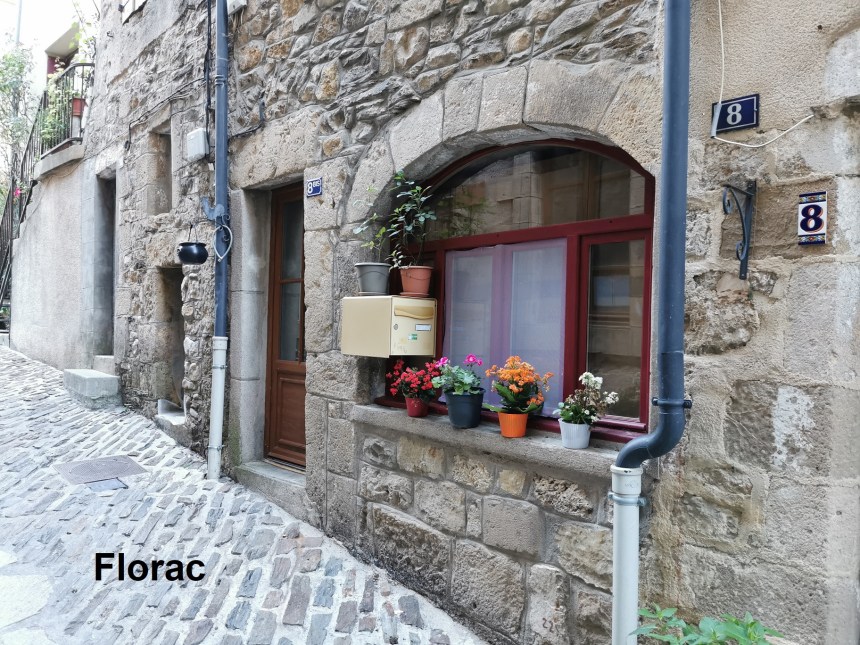
Florac dates back to 1130, when Benedictine monks founded a monastery there. A chateau was built a hundred years later, and the settlement grew from there to be a town. Today, some surrounding communities have been amalgamated into the town, and it is officially called Florac Trois Rivières. It is a pleasant place with an old town centre, the central avenue being lined with trees. Stevenson records that it was noted for its handsome women. When he travelled there, it was just over a century and a half since the events of the Camisard War, and he was able to find remnants in the folk memory of such events. But even then, in 1878, when Stevenson travelled this way, those events were fading into the dim and distant past. Today, in 2022, there is no sign that this was once an area of violent conflict.
That evening, Joff and I went to a pizza restaurant. It offered simple fare, ideal for the walker. As Joff ate his pizza and I my lasagne, other people that we had seen on the trail came in. We greeted each one, all of us recognising each other.
With dinner over, it was time to turn in for the night. We returned to our accommodation and I can truthfully say that I slept soundly through the night.


